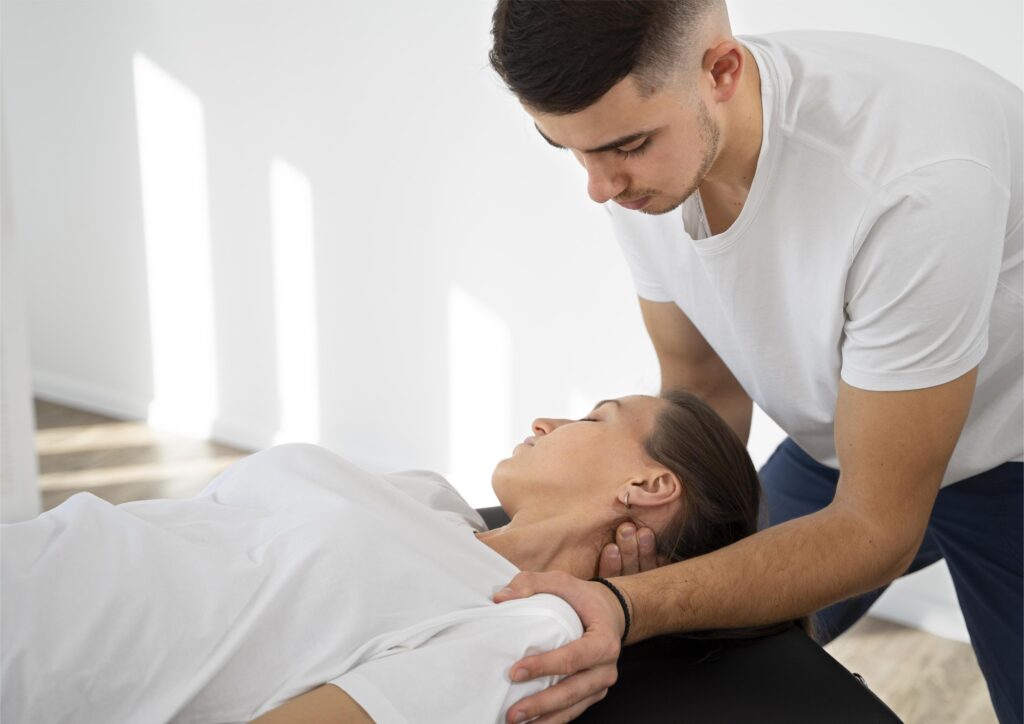

Neck pain is one of the most common complaints we hear about here at Lexington Spinal Care — and honestly, it makes a lot of sense. We live in a world where most people are looking down at phones, hunched over laptops, or sitting at desks for hours on end. Over time, all of that adds up. Whether your neck pain came on suddenly after sleeping in an awkward position or has been quietly building for months, it can seriously affect your quality of life. The good news is that neck pain is a condition that responds well to conservative care, and understanding what’s driving your discomfort is the first step toward feeling better.
What Is Neck Pain?
Neck pain refers to any discomfort, stiffness, or soreness in the cervical spine — the seven vertebrae that make up the upper portion of your spine. It can range from mild tension to sharp, limiting pain, and it may or may not be accompanied by other symptoms like headaches, shoulder tension, or arm discomfort. Neck pain is incredibly common and, in most cases, is not a sign of something serious.
What Causes Neck Pain?
Neck pain rarely appears out of nowhere. In most cases, there’s a combination of physical, postural, and lifestyle factors at work. Understanding these root causes is important because it helps guide the right kind of care — and it helps you make changes that actually stick.
One of the most frequent causes we see at Lexington Spinal Care is poor posture — particularly what’s known as “forward head posture.” When your head drifts forward in front of your shoulders, even by just an inch or two, it significantly increases the load placed on the muscles and joints of your cervical spine. Over time, this strain accumulates and leads to pain, stiffness, and muscle fatigue.
Muscle tension and tightness are also major contributors. Many people carry stress in their neck and upper shoulders, which leads to chronic muscular guarding and tenderness. Activities like driving long distances, sitting at a poorly arranged workstation, or looking down at a smartphone for extended periods can all trigger or worsen this kind of muscular tension.
Degenerative changes in the cervical spine are another common source of neck pain, especially as we get older. Conditions like cervical osteoarthritis or disc degeneration can reduce the amount of space between vertebrae and contribute to stiffness and localized discomfort. In some cases, a disc may bulge or herniate and place pressure on nearby nerves, which can cause pain that radiates down the arm.
Trauma is also a significant cause. Whiplash injuries — often resulting from car accidents — can strain the soft tissues of the neck and disrupt the normal alignment of the cervical spine. Even minor incidents can leave lasting effects if not properly evaluated and addressed. Here in Lexington, SC, Dr. Edward Carpenter frequently works with patients recovering from these types of injuries.
Recognizing the Signs and Symptoms
Neck pain can present in many different ways, and no two patients experience it exactly the same. That said, there are some patterns that Dr. Edward Carpenter and the team at Lexington Spinal Care see consistently.
The most obvious symptom is localized pain or stiffness in the neck itself — often worse in the morning or after prolonged periods of sitting. Many patients describe a feeling of tightness or “knotting” in the muscles along the sides of the neck and upper shoulders. Turning the head fully to one side may feel limited or painful.
Headaches are another very common companion to neck pain. When tension builds in the upper cervical region, it can refer pain upward into the base of the skull, temples, or forehead. These are called cervicogenic headaches, and they’re often mistaken for tension headaches or migraines. The key distinction is that cervicogenic headaches originate from dysfunction in the neck, not the head itself.
When a nerve in the cervical spine becomes irritated or compressed, you may experience symptoms that travel beyond the neck — into the shoulder, arm, or even down to the fingers. This is known as cervical radiculopathy. Symptoms can include sharp or burning pain, tingling, numbness, or weakness in the arm or hand. If you’re experiencing any of these radiating symptoms, it’s especially important to get a thorough evaluation.
Understanding Your Cervical Spine
The cervical spine is an engineering marvel. It supports the full weight of your head — which typically weighs somewhere between 10 and 12 pounds — while allowing a remarkable range of motion in nearly every direction. It’s made up of seven vertebrae (labeled C1 through C7), stacked on top of one another with intervertebral discs in between to absorb shock and allow movement.
Running through the center of these vertebrae is the spinal cord, and nerves branch outward from between each vertebral level to supply sensation and motor function to different parts of your head, neck, shoulders, and arms. This is why problems in the cervical spine can sometimes produce symptoms far from the neck itself.
The top two vertebrae — C1 and C2, often called the atlas and axis — are uniquely designed to allow the head to rotate and tilt. These joints are particularly sensitive to misalignment and tension, and dysfunction here is commonly associated with headaches, dizziness, and upper neck stiffness. At Lexington Spinal Care, we pay close attention to the relationship between these upper cervical segments and overall head and neck function.
When the natural curve of the cervical spine is disrupted — either through poor posture, injury, or degenerative changes — the mechanical stress on the discs, joints, and muscles increases significantly. Restoring and maintaining that healthy curve is a key goal of chiropractic care for neck pain.
How Chiropractic Care Can Help
Chiropractic care is one of the most widely recommended non-invasive approaches for neck pain. Organizations like the American College of Physicians and the National Center for Complementary and Integrative Health have both acknowledged that spinal manipulation and other conservative therapies are appropriate first-line options for neck pain in many cases. Research suggests that chiropractic care can help reduce pain, improve range of motion, and support long-term function.
At Lexington Spinal Care, Dr. Edward Carpenter takes a thorough, individualized approach. Every patient starts with a comprehensive evaluation that includes a postural assessment, orthopedic and neurological testing, and a detailed discussion of your history and symptoms. This helps identify the specific structures involved and allows for a care plan tailored to your needs.
Chiropractic adjustments to the cervical spine are gentle, targeted movements designed to restore proper joint mobility. When joints in the neck become restricted or misaligned, they can irritate surrounding nerves and muscles. Adjustments help restore normal movement patterns, which can relieve tension, reduce nerve irritation, and support the body’s natural healing process.
In addition to adjustments, Dr. Edward Carpenter may incorporate soft tissue therapies, therapeutic stretching guidance, and ergonomic recommendations into your care. The goal is never simply to manage your pain in the office — it’s to help you understand what’s driving your symptoms and give you the tools to feel better and stay better over time.

Practical Tips for Managing Neck Pain at Home
Between visits to Lexington Spinal Care, there are several things you can do to support your recovery and prevent flare-ups. Small changes in your daily habits can make a meaningful difference over time.
Pay attention to your workstation setup. Your monitor should be at eye level so that your head isn’t tilting up or down throughout the day. Your keyboard and mouse should be positioned so that your elbows rest comfortably at roughly a 90-degree angle, and your chair should support the natural curve of your lower back. This helps keep your entire spine in better alignment, which reduces strain on the neck.
Be mindful of how you use your phone. Holding your phone at chest or face level — rather than looking down at it in your lap — dramatically reduces the forward head stress on your cervical spine. Even small, consistent changes like this add up significantly over the course of a day.
Gentle movement throughout the day is important. If you’re sitting for extended periods, take brief breaks to stand, walk, and do some light neck range-of-motion movements. Simple chin tucks — gently drawing your chin straight back toward your neck — can help counteract the effects of forward head posture and activate the deep stabilizing muscles of the cervical spine.
Sleep position matters more than most people realize. Sleeping on your back or side with a supportive pillow that keeps your head in a neutral position is generally recommended. Stomach sleeping, unfortunately, forces the neck into prolonged rotation and can contribute to morning stiffness and pain.
When to See a Chiropractor
If your neck pain has lasted more than a few days without improvement, or if it keeps coming back despite rest and home care, it’s worth getting a professional evaluation. Chronic or recurring neck pain rarely resolves on its own without addressing the underlying cause — and the sooner you seek care, the easier it typically is to correct.
You should also consider seeing a chiropractor if your neck pain is accompanied by headaches, reduced range of motion, or upper back and shoulder tension. These patterns suggest that there may be underlying joint dysfunction or muscle imbalances that would benefit from hands-on care.
There are certain symptoms, however, that warrant immediate medical attention rather than chiropractic evaluation first. These red flags include sudden severe neck pain following a trauma like a fall or collision, neck pain accompanied by high fever and stiffness (which may indicate infection), progressive weakness or numbness in the arms or hands, loss of bladder or bowel control, or difficulty walking or maintaining balance. If you experience any of these symptoms, please seek emergency medical care right away.
Neck Pain Triggers and Posture Patterns
|
Trigger or Habit |
Effect on the Neck |
Better Alternative |
|---|---|---|
|
Looking down at a phone in your lap |
Increases cervical load, promotes forward head posture |
Hold phone at eye level; limit screen time |
|
Monitor positioned too low |
Causes sustained downward neck flexion and muscle fatigue |
Raise monitor so the top of the screen is at eye level |
|
Sleeping on your stomach |
Forces prolonged cervical rotation, stresses joints and muscles |
Sleep on your back or side with a supportive pillow |
|
Cradling phone between ear and shoulder |
Creates lateral neck strain and muscle imbalance |
Use headphones or speakerphone for extended calls |
|
Prolonged static sitting without breaks |
Leads to muscle fatigue and joint stiffness in the cervical spine |
Stand and move for a few minutes every 30-45 minutes |
Myths vs. Facts About Neck Pain
Myth: Neck pain always means something is seriously wrong.
Fact: The vast majority of neck pain is mechanical in nature — meaning it involves muscles, joints, and soft tissues rather than a serious underlying disease. While it’s always worth getting evaluated, most cases of neck pain are not dangerous and respond well to conservative care like chiropractic treatment.
Myth: Rest is the best treatment for neck pain.
Fact: While it may be tempting to avoid all movement when your neck hurts, prolonged rest can actually slow recovery. Gentle, appropriate movement helps maintain circulation, reduce stiffness, and support tissue healing. Current evidence-based guidelines favor active care over extended bed rest for most musculoskeletal conditions.
Myth: Chiropractic adjustments to the neck are dangerous.
Fact: When performed by a licensed, trained chiropractor, cervical adjustments have a strong safety record. Serious adverse events are extremely rare. Dr. Edward Carpenter conducts a thorough evaluation before any treatment to ensure that chiropractic care is appropriate and safe for each individual patient.
Myth: Neck pain is just a normal part of getting older and can’t be helped.
Fact: While age-related changes in the spine are real, neck pain is not something you simply have to accept. Many people experience significant improvement in pain and function with consistent chiropractic care, regardless of their age. Addressing posture, movement habits, and joint function can make a real difference at any stage of life.
Myth: If an X-ray shows no damage, there’s nothing wrong.
Fact: Many causes of neck pain — including muscle strain, joint restriction, and nerve irritation — don’t show up on standard imaging. A clean X-ray doesn’t mean your pain isn’t real or that nothing can be done. Clinical evaluation, functional testing, and a thorough history are often more informative for guiding care than imaging alone.
Final Thoughts from Lexington Spinal Care
Neck pain can be frustrating, limiting, and sometimes scary — but it doesn’t have to be a permanent part of your life. Here in Lexington, SC, the team at Lexington Spinal Care is dedicated to helping community members understand what’s driving their symptoms and find real, lasting relief through safe, non-invasive care.
Dr. Edward Carpenter approaches every patient as an individual. There’s no one-size-fits-all solution for neck pain, and the right care plan depends on your specific history, lifestyle, and goals. Whether you’ve been dealing with chronic stiffness for years or woke up this week with a stiff, painful neck, a thorough evaluation is the best place to start.
You deserve to feel good in your body — to turn your head freely, sleep comfortably, and get through your day without constant discomfort. If neck pain has been holding you back, we’d encourage you to reach out to Lexington Spinal Care and take that first step. The Lexington community has trusted us to help them move better and feel better, and we take that responsibility seriously.
Frequently Asked Questions
How long does it take for chiropractic care to help with neck pain?
This varies depending on the cause and duration of your neck pain, your overall health, and how consistently you engage with your care plan. Some patients notice improvement within a few visits, while others with longer-standing or more complex issues may need several weeks of care. Dr. Edward Carpenter will give you a realistic sense of what to expect based on your individual evaluation.
Can neck pain cause headaches?
Yes. Cervicogenic headaches — headaches that originate from the cervical spine — are well-recognized in the medical and chiropractic literature. Tension and dysfunction in the upper neck joints and muscles can refer pain into the head. Addressing the underlying neck issues often helps reduce the frequency and intensity of these headaches.
Is it safe to get a chiropractic adjustment for neck pain?
For most people with mechanical neck pain, chiropractic adjustments are considered a safe and effective option. A thorough pre-treatment evaluation helps identify any conditions that would make certain techniques inadvisable. At Lexington Spinal Care, patient safety is always the top priority before any care is provided.
What’s the difference between neck pain and cervical radiculopathy?
Neck pain refers to localized discomfort in the cervical region, while cervical radiculopathy involves nerve irritation or compression that causes pain, tingling, or numbness to radiate down the arm. Both conditions can be evaluated and often managed with chiropractic care, though the specific approach will differ depending on which nerves are involved.
Can poor posture really cause that much neck pain?
Absolutely. Postural strain — especially forward head posture from prolonged device use — is one of the most common contributors to chronic neck pain. Research suggests that for every inch your head moves forward in front of your shoulders, the effective load on your cervical spine increases significantly. Over time, this sustained strain leads to muscle fatigue, joint stress, and pain.
Should I use heat or ice for neck pain?
Generally speaking, ice is more appropriate in the first 24-48 hours after an acute injury to help reduce inflammation, while heat can be helpful for chronic muscle tension and stiffness. That said, what feels best for your specific situation matters too. Dr. Edward Carpenter can give you personalized guidance based on your presentation.
TL;DR
-
Neck pain is most commonly caused by poor posture, muscle tension, degenerative changes, or injury — and it affects people of all ages here in Lexington, SC.
-
Symptoms can include localized stiffness, headaches, and radiating arm pain, depending on which structures are involved.
-
Chiropractic care from Dr. Edward Carpenter at Lexington Spinal Care offers a safe, non-invasive way to address the root causes of neck pain rather than just masking symptoms.
-
Simple daily habits — like improving your workstation setup, limiting phone strain, and moving regularly — can make a meaningful difference in neck pain prevention and recovery.
-
Most neck pain is not dangerous, but certain red-flag symptoms (severe trauma-related pain, progressive weakness, or loss of bladder/bowel control) warrant immediate medical evaluation.