
If you spend your days typing at a keyboard, working on an assembly line, or performing any kind of repeated hand and wrist motion, you may have already noticed some early warning signs — tingling fingers, a numb hand when you wake up, or that nagging ache that just won’t quit. Repetitive stress injuries and carpal tunnel syndrome are among the most common conditions we see here at Lexington Spinal Care in Lexington, SC, and the good news is that prevention is absolutely within reach. Understanding what’s happening in your body is the first step toward protecting it.
What Are Repetitive Stress Injuries and Carpal Tunnel Syndrome?
Repetitive stress injuries (RSIs) are a category of musculoskeletal conditions caused by repeated movements, sustained awkward postures, or prolonged force on specific body parts — especially the hands, wrists, elbows, and shoulders. Carpal tunnel syndrome (CTS) is one of the most well-known RSIs, occurring when the median nerve becomes compressed as it passes through the carpal tunnel — a narrow passageway in the wrist formed by bones and ligaments. The result is pain, numbness, tingling, and weakness in the hand and fingers.
What Causes Repetitive Stress Injuries?
The human body is remarkably adaptable, but it does have limits. When the same muscles, tendons, and nerves are asked to perform the same motions over and over — day after day, week after week — cumulative wear begins to build up in ways the body can’t fully recover from on its own. This is the core mechanism behind repetitive stress injuries.
In the case of carpal tunnel syndrome specifically, the median nerve gets irritated or compressed within the tight tunnel at the base of the palm. This can happen due to inflammation in the surrounding tendons, swelling from repetitive motion, or sustained awkward wrist positions that narrow that already-tight space even further. Jobs that involve heavy keyboard use, vibrating tools, cashiering, sewing, carpentry, and even musical performance are commonly linked to this condition.
What many people don’t realize is that RSIs don’t happen overnight. They develop gradually, often over months or years of minor, seemingly harmless stress. Contributing factors include poor workstation ergonomics, inadequate rest breaks, improper posture at the neck and shoulder level (which can affect nerve function all the way down into the hand), and previous injuries that were never fully rehabilitated. Here in Lexington, SC, Dr. Edward Carpenter frequently sees patients who have been living with early symptoms for a long time before they finally decide to seek care.

Signs and Symptoms to Watch For
Recognizing the early warning signs of repetitive stress injuries — and carpal tunnel syndrome in particular — is crucial. The earlier you address the issue, the more options you have and the less damage typically accumulates.
Carpal tunnel symptoms often begin subtly. Many patients notice intermittent tingling or numbness in the thumb, index, middle, and part of the ring finger. This sensation often shows up at night or early in the morning, partly because people tend to sleep with bent wrists. As the condition progresses, symptoms may occur during the day as well — especially during tasks like driving, holding a phone, or typing.
Other signs include a weakening grip strength, a tendency to drop things, and a dull, aching discomfort that can travel up the forearm toward the elbow. In more advanced cases, the muscles at the base of the thumb (the thenar muscles) may visibly shrink, a sign that nerve involvement has become more serious.
Broader repetitive stress injuries can also produce pain and stiffness in the forearms, elbows, shoulders, or neck — depending on where the overuse is occurring and how posture and mechanics are being affected throughout the kinetic chain. At Lexington Spinal Care, we take a whole-body approach to evaluating these patterns, because the wrist rarely tells the whole story.
How Chiropractic Care Fits In
Chiropractic care is a natural, non-invasive, drug-free approach that can play a meaningful role in managing and preventing repetitive stress injuries. The focus is on restoring proper alignment, mobility, and nerve function — all of which directly affect how well your body handles repetitive demands.
One of the key insights of chiropractic care is that wrist and hand problems are rarely isolated. The nervous system is interconnected, and misalignments or restrictions in the cervical spine (neck), thoracic spine, or shoulder can contribute to nerve irritation that travels down into the arm and hand. This is sometimes called a “double crush” phenomenon — where the nerve is being compressed or irritated at more than one point along its path. Addressing the whole chain matters enormously.
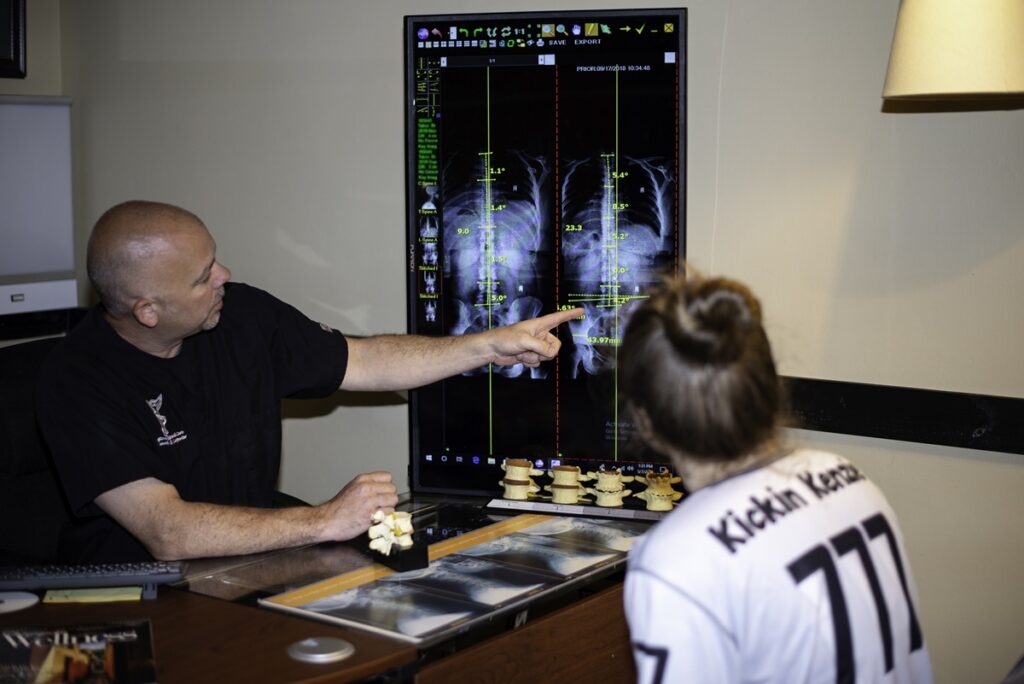
Dr. Edward Carpenter at Lexington Spinal Care evaluates the full picture — from spinal alignment to wrist mechanics — to identify contributing factors that might be missed with a more narrow approach. Chiropractic adjustments, soft tissue work, and targeted guidance on posture and ergonomics can all be part of an individualized care plan.
Research published in conservative care literature, and acknowledged by organizations like the American Chiropractic Association, suggests that chiropractic management can be a valuable component in addressing nerve-related conditions of the upper extremity. While chiropractic is not a cure for carpal tunnel syndrome, it can help reduce contributing mechanical factors and support better overall function of the musculoskeletal and nervous systems.
At our Lexington, SC practice, the goal is always to help patients understand their bodies better and provide care that supports long-term health — not just short-term symptom relief.
Practical Prevention Tips You Can Start Today
Prevention is genuinely the most powerful tool you have when it comes to repetitive stress injuries. There are meaningful changes you can make right now — at your desk, in your workspace, or in how you structure your day — that can significantly reduce your risk.
Start with your workstation setup. Your keyboard should be positioned so your wrists are in a neutral, straight position — not bent upward or downward. Your elbows should rest comfortably at about a 90-degree angle, with your shoulders relaxed. If you use a mouse, keep it close to your body so you’re not reaching forward repeatedly throughout the day. Monitor height matters too — when your screen is too low, your head drops forward, which puts strain on the cervical spine and can affect nerve conduction down through your arms.
Take regular micro-breaks. Even 30 to 60 seconds of rest and gentle movement every 20 to 30 minutes can meaningfully reduce cumulative tissue stress. Gently extending your fingers, rotating your wrists, and rolling your shoulders are simple habits that keep circulation moving and muscles from becoming chronically contracted.
Pay attention to your grip. Many people grip their mouse, steering wheel, or tools far harder than necessary. Excessive grip force is a major contributor to forearm and wrist RSIs. Practice conscious, relaxed gripping whenever possible. If you work with vibrating tools, anti-vibration gloves may provide helpful protection.
Posture throughout the whole body matters. Slouching at your desk shifts the entire load upward into the neck and shoulders, which can compress nerves earlier in their path before they even reach the wrist. Maintaining a supported, upright posture distributes stress more evenly and protects the entire upper extremity.

When to See a Chiropractor
There’s no need to wait until your symptoms become debilitating before seeking help. If you’ve been noticing tingling, numbness, or aching in your hands, wrists, or forearms for more than a few days — especially if it’s happening regularly — that’s a reasonable time to schedule an evaluation.
Symptoms that come and go are often a sign that the condition is still in an earlier, more manageable stage. Getting evaluated during this window gives you the best chance of addressing the issue with conservative, non-invasive care. Dr. Edward Carpenter at Lexington Spinal Care can help you determine what’s contributing to your symptoms and what a reasonable care plan looks like for your specific situation.
That said, there are certain red flags that should prompt you to seek immediate medical evaluation rather than chiropractic care first. If you experience sudden, severe loss of hand function, rapid muscle wasting, or symptoms accompanied by fever, unexplained weight loss, or trauma — please see a medical doctor or go to an emergency facility right away. Chiropractors are trained to recognize when a condition falls outside conservative care, and we will always refer you appropriately if needed.
Common Triggers vs. Preventive Solutions
|
Common Trigger |
What It Does |
Preventive Solution |
|---|---|---|
|
Repetitive keyboard use with bent wrists |
Compresses the carpal tunnel and irritates the median nerve |
Use a neutral wrist position; consider a wrist-rest pad |
|
Forward head posture at the desk |
Strains the cervical spine and can compress nerves traveling to the arm |
Raise monitor to eye level; maintain an upright seated posture |
|
Infrequent breaks during sustained tasks |
Leads to cumulative tissue fatigue and reduced blood flow |
Take 30–60 second movement breaks every 20–30 minutes |
|
Excessive grip force on tools or mouse |
Overloads forearm muscles and tendons |
Practice conscious, relaxed gripping; use ergonomic tool handles |
|
Vibrating power tools without protection |
Creates sustained nerve and vessel irritation in the hand |
Use anti-vibration gloves; limit continuous vibration exposure |
|
Sleeping with wrists bent |
Increases carpal tunnel pressure throughout the night |
Try a neutral-position wrist splint during sleep if symptoms occur at night |
Myths vs. Facts About Carpal Tunnel and RSIs
Myth: Carpal tunnel syndrome only affects people who type all day.
Fact: While computer work is a well-known contributor, carpal tunnel syndrome and other RSIs affect a wide range of workers — including assembly line workers, carpenters, musicians, hairdressers, and even homemakers. Any sustained or repeated hand and wrist activity can be a contributing factor, especially when combined with poor posture or inadequate recovery time.
Myth: If I don’t have surgery, my carpal tunnel will just keep getting worse.
Fact: Many cases of carpal tunnel syndrome — especially when identified early — respond well to conservative, non-surgical approaches. Organizations like the American College of Physicians and NICE guidelines recommend conservative care as a first-line option before surgery is considered. Chiropractic care, ergonomic modifications, and activity adjustments can all contribute to meaningful improvement in appropriate cases.
Myth: The tingling in my hand is definitely carpal tunnel syndrome.
Fact: Hand tingling and numbness can have several causes, including cervical spine issues (nerve compression in the neck), thoracic outlet syndrome, cubital tunnel syndrome (elbow), or even systemic conditions like diabetes or thyroid problems. Proper evaluation is essential to identify the true source of the symptoms before pursuing any specific treatment.
Myth: RSIs are only a concern for older adults.
Fact: Repetitive stress injuries can develop at any age. Younger workers and students who spend long hours on computers or mobile devices are increasingly presenting with early RSI symptoms. In fact, the habits you establish in your twenties and thirties significantly shape your musculoskeletal health in the decades ahead.
Myth: Resting completely is the best thing you can do for an RSI.
Fact: While reducing aggravating activities is important, complete immobilization is generally not recommended for most repetitive stress injuries. Guided, gentle movement helps maintain blood flow, prevent stiffness, and support tissue healing. The goal is smart load management — not total rest. A chiropractor can help you identify which movements to modify and which to maintain.
Final Thoughts from Lexington Spinal Care
Living and working in the Lexington, SC community, we see firsthand how demanding daily life can be on the body — whether you’re at a desk for eight hours, working in a trade, or juggling the physical demands of raising a family. Repetitive stress injuries and carpal tunnel syndrome don’t have to be an inevitable part of a hardworking life. With the right knowledge, supportive habits, and professional guidance when needed, many people can prevent these conditions from becoming a serious problem.
At Lexington Spinal Care, Dr. Edward Carpenter is committed to helping patients in Lexington and the surrounding community understand their bodies and take meaningful steps toward long-term musculoskeletal health. Whether you’re dealing with early symptoms you’ve been ignoring or simply want to be proactive about protecting your wrists and hands, we’re here to help. Our approach is gentle, thorough, and rooted in evidence-based conservative care — because your health and your quality of life matter.
If you’ve been wondering whether what you’re feeling in your hands or wrists deserves attention, it probably does. You don’t have to wait until it gets worse. Reach out to our team at Lexington Spinal Care and take the first step toward understanding and protecting your body.
Frequently Asked Questions
Can a chiropractor actually help with carpal tunnel syndrome?
Chiropractic care can be a helpful component of a conservative approach to carpal tunnel syndrome, particularly when spinal alignment and upper extremity mechanics are contributing factors. Dr. Edward Carpenter at Lexington Spinal Care evaluates the full picture — from your neck to your wrist — to identify what may be driving your symptoms. While results vary by individual, many patients find meaningful relief through chiropractic care combined with ergonomic changes.
How long does it take for carpal tunnel symptoms to develop?
Carpal tunnel syndrome typically develops gradually over months or years of repeated stress. It rarely appears suddenly without a history of contributing activities or postures. Early symptoms like occasional nighttime tingling may be present long before pain or weakness become noticeable, which is why early evaluation matters.
Is carpal tunnel syndrome the same as a repetitive stress injury?
Carpal tunnel syndrome is one type of repetitive stress injury, but the two terms are not interchangeable. RSIs encompass a broad range of conditions affecting muscles, tendons, and nerves due to repetitive motion — including tendinitis, bursitis, epicondylitis, and more. Carpal tunnel specifically involves compression of the median nerve at the wrist.
What activities at home might be making my wrist symptoms worse?
Common home activities that can aggravate wrist and hand symptoms include prolonged smartphone use, knitting or crocheting, cooking tasks with repetitive chopping or stirring, and even sleeping with bent wrists. Paying attention to how your wrists are positioned during these activities — and building in rest — can make a meaningful difference.
Should I wear a wrist brace for carpal tunnel symptoms?
A neutral-position wrist splint worn during sleep is often recommended for nighttime carpal tunnel symptoms, as it prevents the wrist from bending and increasing pressure on the median nerve. Wearing a brace during the day may help in some situations, but it’s best to get guidance from a healthcare provider to ensure you’re using it appropriately and not masking a more significant issue.
When should I be concerned enough to see a doctor right away?
If you experience a sudden and significant loss of hand strength or coordination, rapid muscle wasting at the base of the thumb, symptoms following trauma, or any neurological symptoms accompanied by systemic signs like fever — seek medical attention promptly. These may indicate a more serious condition requiring immediate evaluation beyond conservative care.
TL;DR Summary
-
Repetitive stress injuries, including carpal tunnel syndrome, develop gradually from sustained or repeated motions — often worsened by poor posture and workstation setup.
-
Early symptoms like nighttime tingling, numbness, or wrist aching are warning signs worth taking seriously — the sooner you act, the more options you have.
-
Chiropractic care addresses the full mechanical picture, including spinal alignment, nerve function, and wrist mechanics, as part of a non-invasive approach.
-
Simple preventive habits — neutral wrist positioning, regular micro-breaks, relaxed gripping, and proper posture — can significantly reduce your risk.
-
At Lexington Spinal Care in Lexington, SC, Dr. Edward Carpenter and our team are here to help you understand and protect your musculoskeletal health for the long term.