
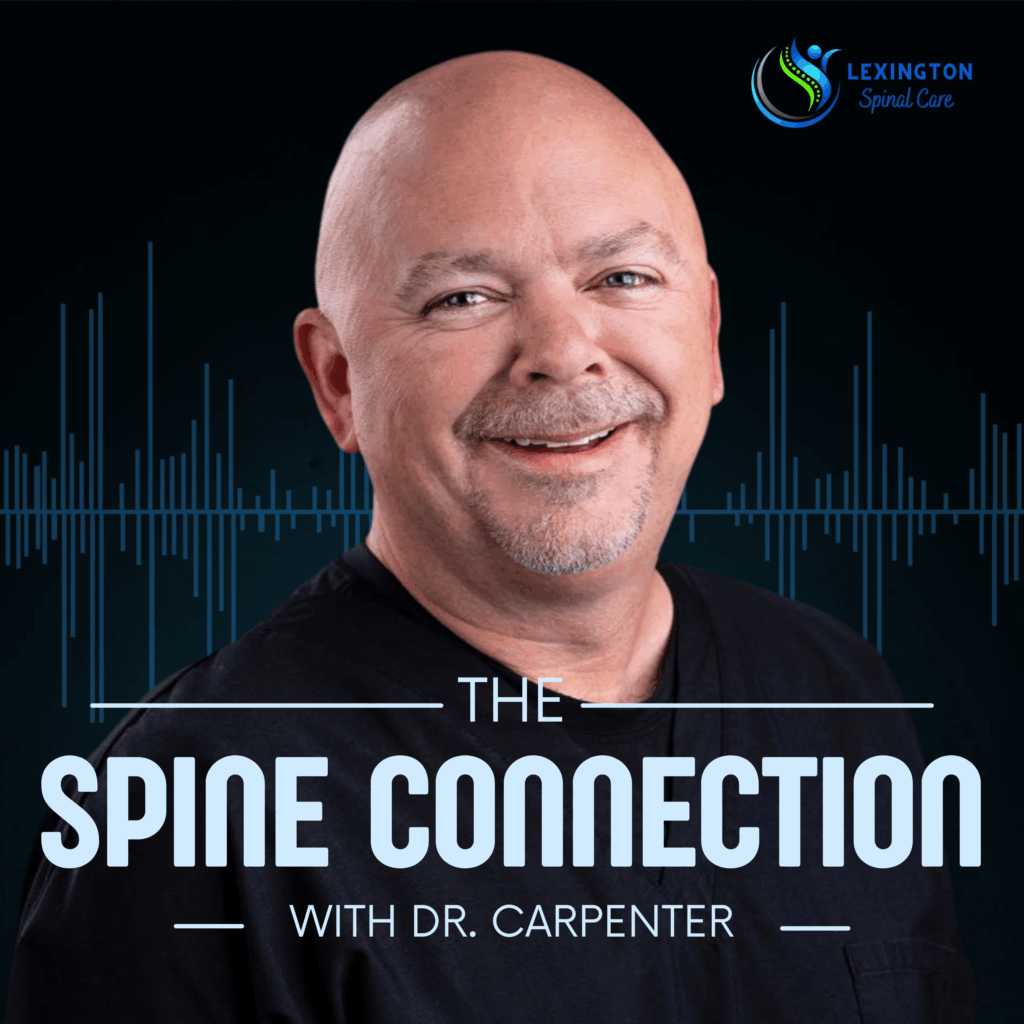
Share this episode:
In this episode of the Lexington Spinal Care podcast, Dr. Carpenter tackles one of the most universal health complaints: everyday aches and pains. From morning back stiffness to chronic neck soreness and persistent shoulder tension, these low-level issues can quietly drain your quality of life.
Dr. Carpenter breaks down natural, accessible approaches to managing these common discomforts without immediately reaching for medication. Whether you’re dealing with work-related strain or general wear and tear, this episode offers practical guidance you can start applying right away.
To learn more or schedule a visit with Dr. Edward Carpenter, reach out to Lexington Spinal Care in Lexington, South Carolina.
Hey there, and welcome back. I’m Doctor Carpenter, and you’re listening to the Lexington Spinal Care podcast, coming to you from right here in Lexington, South Carolina. Today we’re talking about something that affects just about everybody — everyday aches and pains. That low-level soreness that shows up in your neck after a long day. The stiffness in your lower back when you get out of bed in the morning. That nagging tension between your shoulders that never quite goes away. Sound familiar? Yeah, I thought so.
Here’s the thing — a lot of people just accept that pain as part of life. They think, well, I’m getting older, or this is just what happens when you sit at a desk all day. And I get it. But what I want you to understand today is that there are real, natural things you can do to feel better. You don’t have to just push through it.
Let’s start with movement — because this is the big one. Now, I know what you’re thinking. It hurts, so I should rest, right? Not always. In most cases of everyday muscle and joint pain, gentle movement is actually one of the best things you can do. When we stay still for too long, the muscles get tight, circulation slows down, and that stiffness just digs in deeper. Even a ten-minute walk can make a real difference. Just getting up from your chair every hour and moving around — rolling your shoulders, doing a gentle neck stretch, walking to the other side of the building — that kind of thing adds up throughout the day.
Now here’s what’s interesting — posture plays a huge role that most people underestimate. If you’re leaning forward toward a screen for hours at a time, you are putting a tremendous amount of extra load on your neck and upper back. Think about your head — it weighs somewhere around ten to twelve pounds. And every inch it drifts forward from your shoulders, the effective load on your spine increases significantly. That’s why you feel that burning tension at the end of the day. Being mindful of how you’re sitting, bringing your screen up to eye level, keeping your feet flat on the floor — these are simple adjustments that can genuinely reduce that daily wear and tear.
The third thing I want to talk about is hydration and sleep, because these two are wildly underrated when it comes to pain. Your spinal discs — those little cushions between your vertebrae — they actually rely on water to maintain their height and their ability to absorb shock. When you’re dehydrated, those discs get compressed more easily. And sleep — that’s when your body does most of its healing and recovery. If you’re not getting enough quality rest, your pain tolerance drops, your muscles don’t recover, and everything just feels worse. So drink your water. Protect your sleep. These aren’t fancy tips, but they work.
Now, what can you start doing today? First, set a timer on your phone to get up and move once every hour. Second, take a look at your workspace and ask yourself — is my screen at eye level? Are my feet on the floor? Third, grab a water bottle and keep it with you all day. And tonight, try to get to bed thirty minutes earlier than usual. Small things. But they stack up.
And here’s when I’d encourage you to come see us. If your pain has been hanging around for more than a week or two, if it’s interfering with your sleep or your daily routine, or if you’re noticing it spreading or getting more intense — that’s a signal your body is sending you, and it’s worth paying attention to. At Lexington Spinal Care, we take the time to actually figure out what’s going on and come up with a plan that makes sense for you. We’re not a one-size-fits-all kind of practice. We want to understand your life, your job, your habits — and help you feel like yourself again.
Thank you so much for tuning in today. It really does mean a lot that you spend a few minutes with us. If anything I said today resonated with you, share this episode with a friend or a family member who might need to hear it. And if you’re ready to take that next step, give us a call or stop by. We are right here in Lexington, South Carolina, and we would love to help. This is Doctor Carpenter with Lexington Spinal Care — take care of yourselves, and we’ll talk again soon.

I absolutely love Lexington Spinal Care! Every single person that works there is so kind and caring and they have helped me with my pain so much!! Best Chiropractor ever!!!

I'm a new patient in Lexington Spinal Care and I'm very appreciative of the couple visits I've already had. The doctor is very thorough, knowledgeable, and genuinely really cares about getting the results I need. The staff is very helpful and very polite

Dr Carpenter, Julie and the team are fantastic. Every time I forget my age and do something I shouldn’t, Doc makes it better. Thanks gang for what you do.

Dr. Carpenter and his staff are very nice and welcoming! Every time i go in for treatment , i come out feeling much better! My back had been giving me a fit for months and i was taking ibuprofen for temporary relief. I'm impressed that Dr. Carpenter has never told me to take any pain medicine. Noooow after 4 treatments, i'm getting out of bed instead of rolling out of bed! I will continue to go to Lexington Spinal Care and would recommend them to evetyone who is having spinal issues.

I can’t believe it took me as long as it did to seek help for my back pain. Lexington Spinal Care is extremely thorough in figuring out exactly what’s causing pain and discomfort and Dr Carpenter explains things in a way that is easy to understand. They are affordable and provide real results! Within 2 visits so far I can already notice a BIG positive change with pain and discomfort I’ve had for a while before seeking help. I can’t recommend Lexington Spinal Care enough! If you have pain too than it’s a necessity that you make an appointment with Dr Carpenter. Thank you very much Lexington Spinal Care!

The absolute best chiropractic care. And the nicest staff too.

During the many years I have been a patient of Lexington Spinal Care, I have found Dr. Carpenter and his staff to be extremely helpful, friendly and capable. I feel fortunate to have found this practice, and highly recommend them.

The best Chiropractors ever! Great staff. Always and forever Angie is so wonderful.

I have been a patient of Lexington Spinal Care for the last 12 years. I love Dr. Carpenter and all the staff! Everyone is so caring and friendly- they make you feel like family! From Lauren and Stephanie welcoming you at the front desk; to Annie and Julie who do different therapies; and Angie and Trevor performing various treatments and therapies. You never feel like a number and they greet you by name. They offer many different types of treatments and consistently upgrade their equipment. Over the years, I have received adjustments, pettibon therapy, spinal decompression, rolling table, TENS, and ultrasound therapies. However, other therapies are offered in the office if you need. Dr. Carpenter is always open to trying different therapies, if other things have not worked. He is willing to work with you to help you feel your best!!!

Staff are very nice and friendly! The treatments have improved my quality of life (better sleep, less pain).

Staff is very kind, friendly, and active with all of the patients. Very attentive and comfortable environment.

They helped get my back in alignment so it doesn't not hurt all of the time. Friendly staff!

Love me some Dr. Carpenter! He does a fine job and the Staff is always friendly and accommodating.

The staff are very nice and always make sure you are comfortable.

I have been a patient on and off for about 15 years. Dr. Carpenter and the whole staff are genuinely kind and care about you and your care. Best chiropractor around!

I love the staff and the care that I received. Lexington spinal Care is awesome. I recommend Them and your back will feel awesome and you will be smiling every time you come

Went to Lexington Spinal Care as a new patient . Received excellent service , was very prompt and knowledgable. Highly reccommend going to Dr. Carpenter for your chiropractic needs.

It was an amazing experience, my first time in. The staff was fantastic and extremely friendly. The chiropractor was super knowledgeable about what pain I was feeling and how to treat it.

Employees are awesome!! Service is awesome as well!!

Dr. Carpenter and all of the staff are the best!! I have been receiving care for over 20 years and feel great! They are the first line of care for my husband and I for our medical concerns. The very best in chiropractic care!!

I’ve been under Dr. Carpenter’s care for the past seven years. From the first office visit, he and the knowledgeable staff have been welcoming and shown a true concern for my overall wellbeing. I am a weekly visitor getting “maintenance” adjustments and E-Stim therapy which help to relieve the aches and pains from everyday life. If the need arises, more frequent visits and access to a vast variety of equipment and therapies have helped me to recover more quickly from misalignments and injuries. I highly recommend Lexington Spinal Care.

Experience was great. The staff is very helpful and friendly.

From the beginning I have had such a wonderful experience leaving me with less pain, and a plan to keep going. This has been a blessing!

Been with them over a year and never felt better!Angie is so amazing you gotta come by and say hi! She gives the best hugs! ~Vanessa

Warmly welcomed and kindly guided through process. Great customer service. Felt well informed. Recommend!

Julie is the best coach. She goes beyond for her clients and she’s there for you 100%. She’s my hero. I couldn’t do it without her!

We have used Lexington Spinal Care for years. We have benefited from all the services they offer and love Dr. Carpenter and his staff.<br><br>We absolutely love Angie!

"My lower back pain was so bad I could barely walk after working a full day, but after a few sessions with Dr. Carpenter, I feel like a new person. The staff at Lexington Spinal Care are all phenomenal and always greet you with the BEST attitude! I am so thankful to be a part of Lexington Spinal Care!

I always feel better when I leave. People are so great, always friendly

I have been working with the staff for almost 2 years. Since working with them, my life has completely changed. I am moving better, lost 82 inches, back at the gym. The staff is amazing. I keep their business cards on hand because I recommend them every single time.

Awesome, friendly staff and so helpful with getting me straight again!!

They are knowledgeable and helpful. I am glad they were able to adjust me. I plan on going again! 😀

Dr. Carpenter and team are amazing. I've been a patient for many years and love everyone here (except for Trevor). I give him movie recommendations and he has yet to see them. Anyways! You won't regret being a patient! Doc has truly helped me and my family and 5 stars aren't enough!

Wonder experience and great results each time I go

Lexington Spinal Care does such a great job of taking care of patients. Friendly and helpful staff!

Great place to improve and maintain your health! Highly recommended! Staff is so nice and personable!!! There is chiropractic service, weight advice, muscle testing, laser therapy, massage. You’ll not be disappointed!

The absolute best Chiropractor in the area!

Staff is amazing and very helpful. I wouldn’t recommend anywhere else then right here!

Love them! Angie is the best! (All of them are really)😉


